

Spoiler
m.thewire.in Not Reform But Regression: Opposition Stages Walkout as Lok Sabha Passes Transgender Bill Sravasti Dasgupta 11 - 14 minutes
The Bill was cleared by voice vote during an opposition walkout over the government’s refusal to send it to a parliamentary committee. The LGBTQIA+ community has been opposing the provisions of the Bill and a cross-section of MPs from across the country voiced their opposition in parliament as the bill was suddenly taken up.
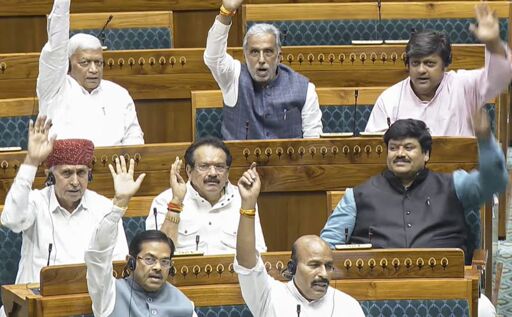
New Delhi: Lok Sabha on Tuesday (March 24) passed the Transgender Persons (Protection of Rights) Amendment Bill, 2026, by voice vote, after the opposition staged a walkout in protest against the proposed legislation not being sent to a select committee. The Bill was passed after a discussion that lasted only about two and a half hours. While opposition members demanded it be sent to a parliamentary committee, not passed in haste, Union parliamentary affairs minister Kiren Rijiju made it clear that the Bill needed to be passed on Tuesday itself.
Rijiju did not provide any explanation for why the legislation, which he called “important”, was being taken up in a hurry, or why it needed to be passed urgently. He also did not explain why he stopped the discussion on the Finance Bill, 2026 midway to take up the Transgender Bill.
The Bill, which was taken up around 4.20 pm, was passed by 6.45 pm by voice vote, in the absence of opposition members. Only 15 Members of Parliament spoke during the discussion, apart from Union Minister for Social Justice and Empowerment Virendra Kumar. During the discussion, opposition members called the Bill a “regression” and criticised it for violating dignity, invading privacy and taking away the right to self-determination of gender.
In his about two minute long reply to the discussion, Kumar did not provide any clarification to the concerns raised by the opposition members. He simply said that the Bill’s “sole purpose" was to protect individuals who “face severe social exclusion due to their biological condition”.
The Bill amends the Transgender Persons (Protection of Rights) Act, 2019 legislated in response to the Supreme Court’s landmark 2014 judgment in National Legal Services Authority v. Union of India (the NALSA judgement). The Bill was being opposed by transgender groups, opposition parties and legal experts, who said it weakened the principle of gender self-determination and narrowed the definition of a transgender in the 2019 Act. The opposition to the Bill included that it erased trans men as well as non-binary persons who fell outside these categories, while criminalising community groups and chosen families of transpersons on the premise of trans identities being coerced. Tearing hurry
While Lok Sabha was discussing the Finance Bill, 2026, at about 4.15 pm Rijiju rose to say that the Transgender Rights Amendment Bill, should be taken up. He said Union Finance Minister Nirmala Sitharaman would deliver her reply to the discussion on the finance bill Wednesday. Sitharaman was present in the House and seated next to Rijiju when he made this statement.
Rijiju also said that while opposition members had raised objections to the Bill in the Business Advisory Committee (BAC) meeting, it needed to be passed on Tuesday (March 24) itself.
“At the Business Advisory Committee, opposition members had some disagreements over the Transgender Bill. Our position is clear, that this Bill is not against anyone. When we discuss the Bill, clarity will come. We can take up the Transgender Bill now, as it has to be passed, and tomorrow, after Question Hour, the finance minister will give her reply to the Finance Bill. I would like the sense of the House for its approval on this,” he said.
Opposition members protested and said that the Bill should be sent to a parliamentary committee and not passed in haste.
“We are willing to cooperate. Our only demand was not to bring this Bill in haste and to send it to a select committee or standing committee. We requested this in the BAC too," said Supriya Sule, the Nationalist Congress Party (Sharad Pawar) Member of Parliament from Baramati, Maharashtra.
Despite objections from members of the Congress party, Trinamool Congress and Samajwadi Party, demanding the Bill be sent to a committee, Rijiju insisted on discussing and passing it immediately. He did not provide any explanation for why the government was unwilling to send the Bill to a committee, despite acknowledging it was the opposition’s demand.
Instead, Rijiju said the Bill did not include any major changes, despite the members of the transgender community and activists contending that its provisions amounted to erasure and undid decades of hard-won rights.
Also read: Full Text | The Future of Queer Rights in India and Why the Judiciary Must Play Catalyst
The Bill introduces large-scale changes, including redefining who a transgender person is by doing away self-identification, erases trans men and non-binary people and gives sweeping new powers to medical boards and district magistrates.
"It is true that in the BAC, Congress, TMC, NCP (SP) had given a combined request. We said then also this is not a major amendment. There has already been a detailed discussion. The amendment has been discussed in the standing committee for a year. The government is not against anyone; we only want to remove any shortcomings. During the discussion, you can raise all your concerns. We have noted your opposition but this is a very important Bill and should not be delayed, and passed today itself,” said Rijiju.
Moving the Bill, Kumar said that to ensure “transgender persons can avail themselves of the benefits of this Act, it was necessary to provide a precise definition for them”. He said that the Bill would provide for the establishment of a medical board, while district magistrates would issue identity cards to transgender persons. Regression, violates dignity, privacy
During the debate, opposition members criticised the Bill for being a “regression”, and said it was not based on consultation and demanded it be sent to a select committee.
Congress MP Jothimani representing Karur, Tamil Nadu, said the Bill was not a “reform but a regression” and showed the “callous attitude” of the Narendra Modi government.
“They are saying this Bill is important, how is this coming to parliament without consultation?” she said. “This Bill is not a reform; it is a regression. It takes away what the constitution and the Supreme Court of India have already guaranteed,” she said.
Jothimani said the NALSA judgement recognised gender identity was a matter of self-determination, whereas this Bill, by involving the approval of medical boards and district magistrates, was fundamentally altering the relationship between the citizen and the state.
"The Bill deletes the right to self-determination, it tells citizens you are not who you say you are until the state approves you. Identity is not a certificate, dignity is not subject to verification,” she said,
Dravida Munnetra Kazhagam MP T. Sumathy, elected from Chennai South constitutency, said she opposed the Bill as it represented a “moral regression” by replacing self-determination with certification and narrowed the definition to a “biological or socio cultural checklist”.
“The Bill pretends to protect while actually narrowing identity, expanding surveillance and reintroducing state control over the most personal truth a human being can hold – who they are,” she said.
Sumathy said the amendment Bill showed that the state did not trust transgender persons, and believed that identity must be certified and that autonomy was negotiable. She said that while the legislative policy was brought to protect those who face severe discrimination, “who decides what counts as biological? Who decides what is “severe”? Is there a biological checklist? Do transmen and non-binary people suffer less? Since when did the government acquire the power to rank identities? When did dignity become selective?" she asked.
Samajwadi Party MP Anand Bhadauria representing Dhaurahra in Uttar Pradesh pointed to the protests being held across the country against the Bill and said that if the government had sought to bring welfare and protect the transgender persons, then “why are they opposing it on the streets?”
LGBTQIA+ community members protest against the Transgender Persons (Protection of Rights) Amendment Bill, 2026, in Kolkata, Sunday, March 22, 2026. Photo: PTI.
Bhadauria, opposing the Bill, said that the BJP wanted to make people stand in queues – from demonetisation to their identity. "Now, you want to make transgender people stand in line for their identity,” he said.
Opposition members also raised objections to the Bill requiring hospitals that perform gender-affirming surgery to report details of their patients to state authorities and the creation of criminal offences in cases of trans identities are coerced.
Sule said that the reporting of invasive medical procedures was “intrusive”. “The government should withdraw it. This is exactly why we wanted the Bill to go to a select committee, because it is completely against the privacy and personal lives of every citizen. Why are you criminalising help provided by NGOs? There is so much ambiguity in this. Are we making this an inclusive Bill or excluding them?” NDA gives support
The Bharatiya Janata Party’s allies, including the Telugu Desam Party (TDP) and the Janata Dal (United) or JD(U) extended their support for the Bill. However, TDP MP Byreddy Shabari, representing Nandyal, ended her speech in support of the Bill saying that the government should listen to the many concerns being raised by the community.
Shabari, however, supported gender affirmation at birth and said birth certificates are used until death and said, “Why can’t a transgender have an identification?”
Also read: ‘Queering the Law’: A Policy Brief Seeks Equality Beyond ‘Supriyo’
“Fake cases have been increasing, where people are posing as transgender. When the opposition was in power, did they do justice? They were left to rot on the road,” she said.
JD(U) MP Alok Kumar Suman (Gopalganj, Bihar), supporting the legislation, said the 2019 Act was historic, but had some shortcomings due to which welfare benefits like SMILE were not reaching the intended beneficiaries in the LGBTQIA+ communities.
“Medical boards are being opposed, but in any sector are benefits given without scrutiny? For instance SC, ST, OBC [community members] have certificates as proof, divyangan have medical certificates under which they are given welfare benefits. Why is the medical board being opposed in this case?” he said.
“There are many countries which require certification. India has created a system under which benefits will be given and accountability will also be sought. This legislation gives confidence to transgender persons that they are equal citizens of this country.” Minister’s reply
In his reply, Kumar said the sole purpose of the amendments was to “protect those individuals who face severe social exclusion due to their biological condition”.
He said that the Bill also sought to protect children from being kidnapped and subjected to hormone therapy or coercion to change their gender so that they could be made to beg for alms.
“Following this amendment, upon the recommendation of the medical board, the District Magistrate will issue an identity certificate as a transgender person,” he said.
He did not provide any specific response to concerns raised by opposition members on the Bill taking away the right to self-determination, dignity and invasion of privacy, or why the medical board was being brought in, or new criminal offences were being included. His reply lasted for barely two minutes before the Bill was put to vote.
Opposition members, who were demanding that the Nill be sent to a committee during his reply, then staged a walkout and the Bill was passed by a voice vote.
This article went live on March twenty-fifth, two thousand twenty six, at fifty-nine minutes past twelve at night.
The Wire is now on WhatsApp. Follow our channel for sharp analysis and opinions on the latest developments.
Read article if you want your blood to boil, bill revokes the constitutional right to self determination of gender, erases queer people, requires state approval and surveillance for transition and criminalises those who help queers as brainwashers among other things.
Filled with lies, queer and transphobia and doublespeak about protecting the disabled from evil fake trans people.
Bill has passed but one can keep an eye on the Supreme Court, this is unconstitutional by its own previous interpretation of the constitution.
Please, saar, do the needful