

This is evident when I show what handwritten Japanese (Kanji only without any Kana) looks like, they still mistake it for Mandarin (due them being logographic), the same applies towards google searches too, as when I type a Japanese word in Kanji (despite having the UI and browser set in Japanese or English) I still get results in Mandarin since all the websites contain the TLD .cn or .tw when I am looking for Japanese websites ending with (.jp).
If a person is clueless about distinguishing the differences between languages (especially ones that look similar when written even though they’re different, kind of like when writing in French & English but they’re still different languages), then they fall into the trap of “Is that French?” or vice versa for example, when in fact it’s written in English. Does this word all look the “same” to you or not when telling the difference between 日本語 or 中文?.
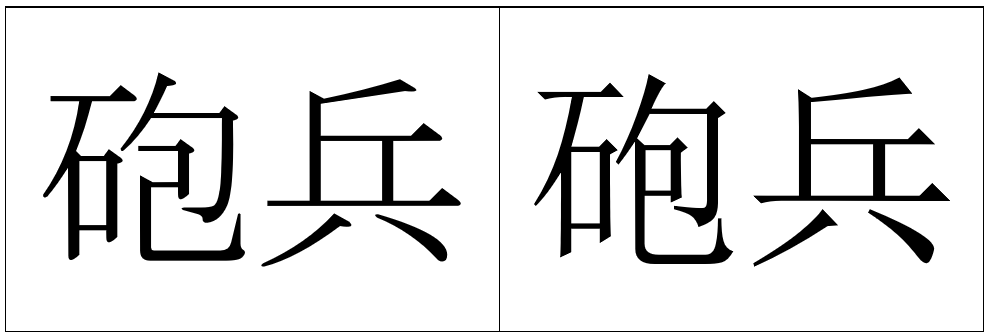
You get the point, I still get comments equivalent to “is that Chinese?” when there’s kana present within the sentence (which Mandarin does not have, as they write entirely in Hanzi). Some words are written the same but pronunciation is very different as they’re unrelated languages. Does the same thing happen to let’s say Norwegian & Danish (or any other European language) since both pairs use similar alphabets and have an identical writing system?
From Japanese or Mandarin, there are characters that look the same but have different pronunciations altogether like:
| - | 日本語 | 中文 |
|---|---|---|
| 擲弾兵 | てきだんへい | Zhì dàn bīng |
| 艦隊 | かんたい | Jiànduì |
| 陸軍 | りくぐん | Lùjūn |
| 神社 | じんじゃ | Shénshè |
| 地獄 | じごく | Dìyù |
In current day tech, East Asian characters are taken from a combined set called “CJK unified ideographs”. When regional variants exist, the language it renders as depends on the font of the user’s device.
There was a recent example that came up: 骨(bone) has the little square on the left in Simplified Chinese and on the right in Japanese. With Hiragana it’s more obvious because of all the curvier letters, but with kanji only phrases even smartphones tend to mix it up.
I can’t tell between Hungarian, Romanian, Bosnian, Albanian, Czech or Slovak, because I haven’t really studied any of them or know any words. In the Cyrillic field, Belarusian, Russian, Ukranian (except for the existence of ï), Bulgarian, Serbian I probably couldn’t be able to tell you what faced with a random paragraph of text.