

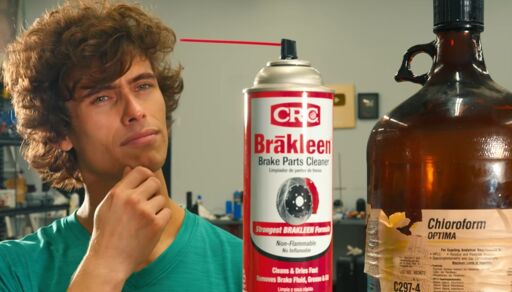
Makers beware!
Much like with common household chemicals used for cleaning, such as bleach and ammonia, improper use of these can produce e.g. chlorine gas, which while harmful is generally not lethal. Things get much more serious with brake cleaner, containing tetrachloroethylene. As explained in the video, getting brake cleaner on a rusty part to clean it and then exposing it to the intensive energies of the welding process suffices to create phosgene.
Normally phosgene isn’t quite that deadly. If you catch it full concentration then you’re in for a bad time as your lungs start blistering but that definitely isn’t something that happens from a small leak unless its also in a confined space. I’ve gotten a face full of phosgene a few times on the job and you definitely notice it. Idk what it smells like because to me it just smells like pain. It feels like you just took a huff off a bottle of drain cleaner. If you get hit with enough of it, it’ll leave you short of breath and your chest burning but the only time I ever got hit with that much was the time I took a plasma cutter to an old refrigerant can I had forgotten to purge with nitrogen first while working in a closed garrage.
Suffice it to say, you would definitely know it if you got exposed to any significant amount of phosgene.