1)“Literally the only feminism I’ve heard about for the past 10 years is intersectional feminism.”
Actions speaks more than words ,
Unlike Scandinavian countries where feminists became so inclusive that they heavily prioritised welfare and empowerment of minority women belonging to Sami tribe community
Whereas in United States , everything is just in words not in action.
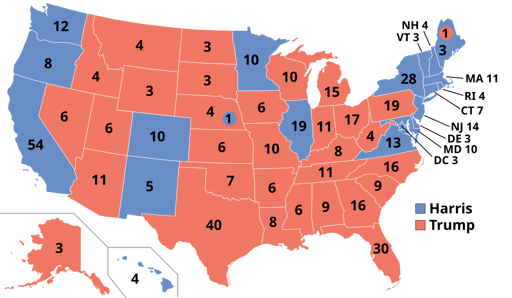
Also the percentage of white women voting for trump increased in United States shows what is the state of intersectionality in United States compared to Nordic countries,
2)“Very much a just-so story. Imo, a far more reasonable interpretation breaks voting patterns along tribal identity, while most women voting care about more things than the very amorphous “collective welfare of all women”. Interesting to note that 38% of latina voters voted for Trump, a statistic strangely absent from your argument”
Exactly—voting is shaped by identity. That’s the point. The large gap between white and Black women voters shows that “women” are not a unified political group, and race often outweighs gender solidarity in practice.
Bringing up Latina voters actually strengthens the argument—different groups of women have different lived realities and priorities. So main stream white feminists avoided problems of minorities despite making claims of suport for intersectionality
3)“I have never met a single self-identifying feminist who would not agree with this to some extent.”
Acknowledging history isn’t the same as centering it. The critique is that these histories are often treated as background context rather than shaping current feminist priorities and policy focus.
4)“I think Adam Smith would have a lot to say about this. Specifically, he would probably point out that the slave states really had an awfully small economy compared to the free states, and that most of the wealth generation which occurred in the US occurred due to productivity gains driven by technological innovations which were most aggressively exploited in the north. In the long run, few people could claim to have really benefitted noticeably from american slavery - it was just a shitty thing to do for no reason.”
That’s a very selective reading. slavery was deeply integrated into early American capitalism—financing, banking, and global trade . The effects didn’t just disappear; they shaped wealth distribution and institutions long-term.
Jim crows laws also disadvantaged black people in economic wealth creation , most of the black workers during this period didn’t had an opportunity to generate assets unlike white people.
productivity gains driven by technological innovations mostly benefitted white people because of restrictions for participation of black people in the economy
5)“I mean, from the pro-DEI arguments I keep hearing on lemmy, DEI seems to mostly involve removing names from resumes before they are rejected by AI or something. But I wouldn’t be surprised if this critique had merit - most people who benefit from adding footholds inside the system are people who know how to work the system.”
Yes—and that’s precisely the critique. When structural inequalities aren’t addressed, benefits often flow to those already closer to power like white women rather than the most marginalized groups.
6)“I really don’t have anything to say to this, because it feels like you kind of just shut down in the middle of a rant. Are you okay? Did you have a stroke?”
Dismissing the point doesn’t address it. There’s research showing that diversity initiatives and educational access programs often disproportionately benefit white women compared to more marginalized groups. That’s a structural outcome worth examining, not ignoring.


1)“Literally the only feminism I’ve heard about for the past 10 years is intersectional feminism.”
Actions speaks more than words , Unlike Scandinavian countries where feminists became so inclusive that they heavily prioritised welfare and empowerment of minority women belonging to Sami tribe community Whereas in United States , everything is just in words not in action. Also the percentage of white women voting for trump increased in United States shows what is the state of intersectionality in United States compared to Nordic countries,
2)“Very much a just-so story. Imo, a far more reasonable interpretation breaks voting patterns along tribal identity, while most women voting care about more things than the very amorphous “collective welfare of all women”. Interesting to note that 38% of latina voters voted for Trump, a statistic strangely absent from your argument”
Exactly—voting is shaped by identity. That’s the point. The large gap between white and Black women voters shows that “women” are not a unified political group, and race often outweighs gender solidarity in practice. Bringing up Latina voters actually strengthens the argument—different groups of women have different lived realities and priorities. So main stream white feminists avoided problems of minorities despite making claims of suport for intersectionality
3)“I have never met a single self-identifying feminist who would not agree with this to some extent.”
Acknowledging history isn’t the same as centering it. The critique is that these histories are often treated as background context rather than shaping current feminist priorities and policy focus.
4)“I think Adam Smith would have a lot to say about this. Specifically, he would probably point out that the slave states really had an awfully small economy compared to the free states, and that most of the wealth generation which occurred in the US occurred due to productivity gains driven by technological innovations which were most aggressively exploited in the north. In the long run, few people could claim to have really benefitted noticeably from american slavery - it was just a shitty thing to do for no reason.”
That’s a very selective reading. slavery was deeply integrated into early American capitalism—financing, banking, and global trade . The effects didn’t just disappear; they shaped wealth distribution and institutions long-term. Jim crows laws also disadvantaged black people in economic wealth creation , most of the black workers during this period didn’t had an opportunity to generate assets unlike white people. productivity gains driven by technological innovations mostly benefitted white people because of restrictions for participation of black people in the economy
5)“I mean, from the pro-DEI arguments I keep hearing on lemmy, DEI seems to mostly involve removing names from resumes before they are rejected by AI or something. But I wouldn’t be surprised if this critique had merit - most people who benefit from adding footholds inside the system are people who know how to work the system.”
Yes—and that’s precisely the critique. When structural inequalities aren’t addressed, benefits often flow to those already closer to power like white women rather than the most marginalized groups.
6)“I really don’t have anything to say to this, because it feels like you kind of just shut down in the middle of a rant. Are you okay? Did you have a stroke?”
Dismissing the point doesn’t address it. There’s research showing that diversity initiatives and educational access programs often disproportionately benefit white women compared to more marginalized groups. That’s a structural outcome worth examining, not ignoring.
It’s crazy how you got downvoted despite having good counter points …
Lemmy is generally anti-feminist in my experience.
Here’s how to quote
> quoted texthow to write a list
how to do both
You can learn this & more from any markdown guide like the one shown when using the help button in the lemmy toolbar.