

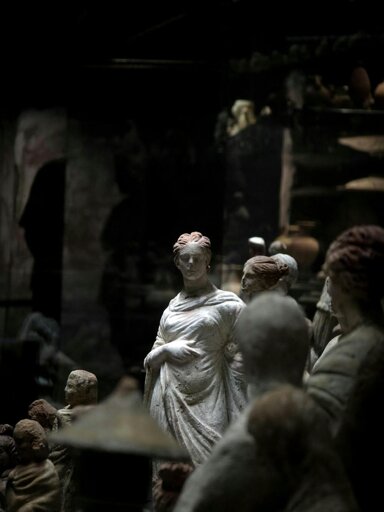
A farming manual written by the Roman writer Lucius Junius Moderatus Columella in the 1st century CE is a window into the roles of the female manager.
An upper-class landowner himself, Columella lists the responsibilities of farm managers, who were probably enslaved. The male manager was termed the vilicus, and the female manager the vilica, terms derived from their roles at the “villa.”
But many historians reading this text have been sidetracked by a false lead: Columella begins his section on the vilica with a long quote from the Greek philosopher Xenophon, who wrote in Athens more than four centuries earlier.
The “natural” role of women, according to Xenophon, was to work indoors. Therefore, in his discussion, the ideal upper-class married woman is depicted staying inside her townhouse to supervise the domestic work of enslaved people.
The Greek writer is not discussing farm workers. In fact, Columella says four times that these ideas are not his own but those of Xenophon, writing long ago.
Columella lists a completely different set of responsibilities for the vilica on a Roman farm: most importantly, the making of wine and olive oil, which were highly valuable commodities—the backbone of landowners’ profits.
In his description of the vilica’s duties, Columella includes extracting juice from grapes during the harvest; adding flavorings and preservatives such as salt, wormwood, fennel or boiled grape juice; and overseeing successful fermentation into wine.
According to Columella, the vilica also managed the processing of other farm products to make them long-lasting and profitable, such as turning inedible olives into olive oil for sale.
ah interesting. on a rather unrelated side note, i’ve been thinking about how to source food on mars. i came up with this idea to use spirulina algae as they are calorie-rich.
they could be grown in a plastic bag outdoors something like this, not requiring big bulky greenhouses:
anyways they have low fat content. so how to source fat? i’m still looking for a good option. it’s interesting to see that apparently, already back in roman times, a source of fat was considered highly valuable. maybe because it’s always more difficult to source fat than carbohydrates and proteins?
Spirulina algae is people!
It’s actually possible to make your own post instead of derailing the topic
Hm ok. Are you a bot?
I haven’t usually known that user to be a bot, but maybe they’re having an episode? Or maybe I’m wrong about them.
Some algal species can be used as biodiesel sources due to their high oil content, so you could probably just diversify the kinds of algae.
Mars isn’t going to like you farming algae on his body. He’s the god of war, he’s gonna murderise you.
Just pray to Persephone while you do it. Best case scenario she calls in a favor with her mom, worst case scenario you get to have lunch with the queen of the afterlife when her brother kills you. Either that or pray to another war god and see what happens for shits and giggles, personally I’d choose Odin for that one since he’d probably appreciate the fuckery.
Thanks you for the tip good buddy Ill go to Venus then.
this is interesting as fuck actually.
Do not feed the bots. This is exactly what Spirulina wants you to think, they have always wanted Mars.