

1·
2 days agoIf you’re in Vietnam, there is also KBlack offline navigation.
It’s a pretty young project but looks very clean from the screenshots. I’ve never used it as I’m in another part of the world.
If you’re in Vietnam, there is also KBlack offline navigation.
It’s a pretty young project but looks very clean from the screenshots. I’ve never used it as I’m in another part of the world.

Even the font got skinnier!

These things are notoriously difficult to measure accurately, but this is from Statistica Statista, which has a reputation for pretty good metrics. At the very least, one would expect their metrics to be comparable across the analysis, if not necessarily a perfect measure of absolute numbers.
Edit: thanks for catching the typo.
Wth is 2.5k?
My bs detector is tingling.

It’d be great if any part of that were testable.
We have no idea what consciousness is.
Literally. It’s something that we all experience, but there is no scientific definition, measure, or framework to study it.
We assume it is a function of our brains, but we could be wrong. Are intelligent birds, apes, and dolphins conscious? What about lizards? Flatworms? Trees? Yeast?
If you want to go down that rabbit hole, search “what’s it like to be a bat?” or “the hard problem.”
My exact setup after trying a lot of different configurations.
I’m assuming that all of the magic would be hoarded by the spellionaires. I’d be stuck in some warehouse loading an infinite number of potions that I can’t afford onto a Pallet of Holding.

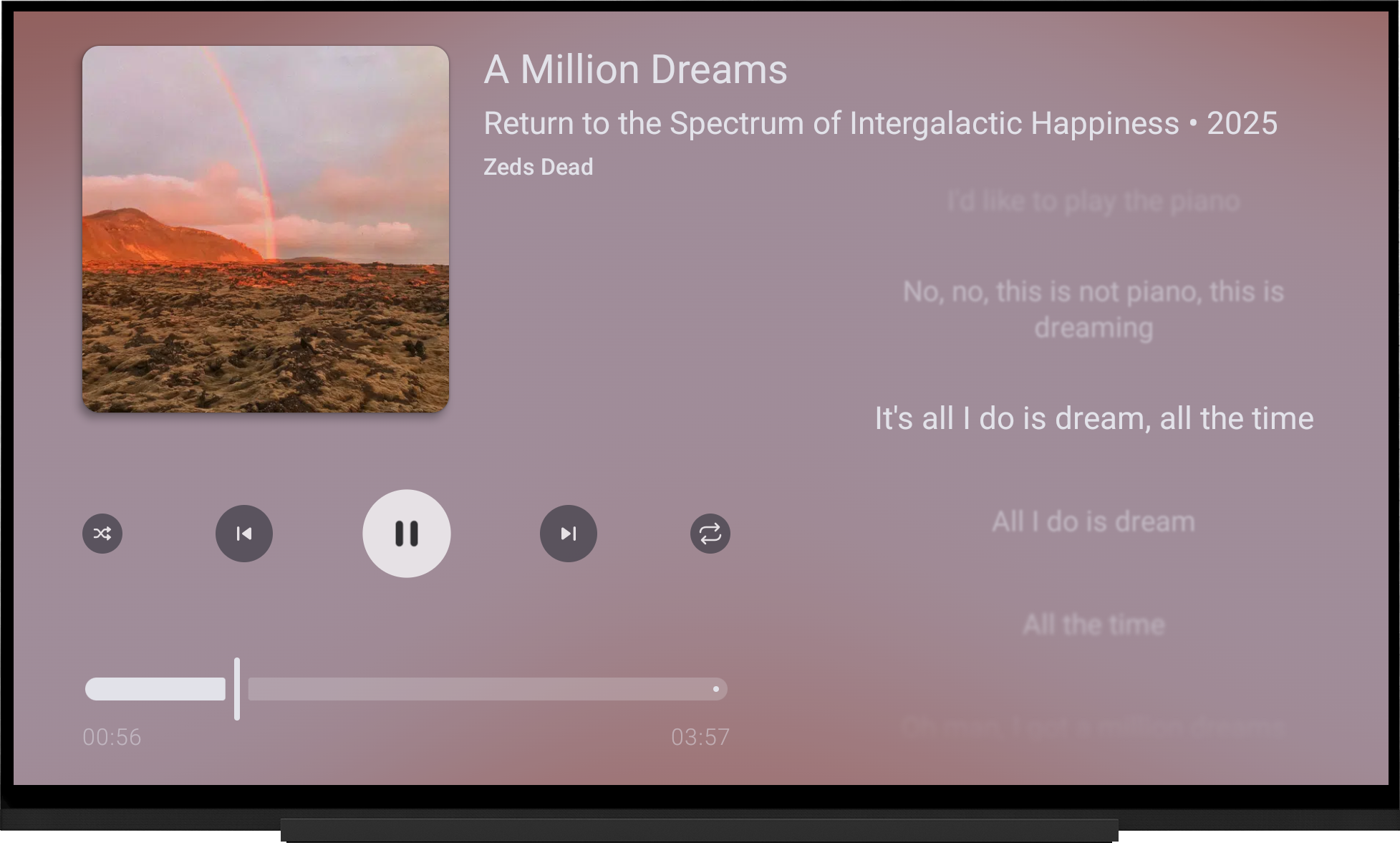
Big +1 for LRCGET. It is extremely powerful and dead simple to use. I’m generally able to point it at a directory and press go. It will return lyrics about as accurately and reliably as any manual search, and it has the (experimental) ability to embed the lyrics as well.
I prefer embedded lyrics, since I know that they will be available and inseparable from the files regardless of what my library looks like in the future.
Never tried it. It looks like maybe the mobile app is not available from open source repos.
FYI, I came across an app called FindFamily on F-Droid, but it looks like a vibe-coded vaporware, and who knows what server it’s connecting to in the background.
On device, I’d trust OwnTracks, Colota, or GPSLogger, then use Dawarich or Reitti on the server. That is, if you are interested in device history, which could be useful in tracking a lost device, or just having your personal memoies saved.
These do not provide defensive measures like photo or remote wiping. FMD can do that over SMS if the phone is disconnected from the server.
I had this and switched to reitti with owntracks specifically to work with multiple family accounts. Owntracks is not as nice as Colota in most ways, but shows the live location of my family. I had some stability issues with dawarich using multiple devices (most likely user error) but liked it. I do think that reitti has a nicer interface and features, but probably a matter of taste.
This is the advice that’s consistent with what I’ve heard from several different lawyers.
There are lawyers who specialize in cases like this (search DUI lawyers and civil rights lawyers). I’d call one. You don’t want to be stuck with a spurious DWI on your record.
It’s amazing to me how widespread this is on Lemmy.
Ridiculous.
Don’t forget how quickly they shut down their Mastodon instance even though it cost them nothing.
Sure. As a fork, it has all of the benefits of Calibre-web. It’s stable, well established, versitile, works well with Calibre desktop software (they are three different projects, despite the similar names). Yet it has a number of different features like automatic ingest, writing/converting files, sending to different devices, etc. There is a pretty complete list on the GitHub page I linked. It has a big community and active development, so its likely that any features you might look for could be coming soon.
There are other self hosted software projects for ebooks (you can even use Jellyfin!). I had switched to Booklore at one point for a more modern UI and tracking, but it was more flash than execution and ultimately looks like it flamed out over some community issues. There are also projects like Kavita that are designed for features around comics/manga, but also do an excellent job with ebooks in general.
You should consider two things: what the library looks like, and where it will be read. If it is mostly books with a few other media (like comics, PDFs, etc.), then CWA is probably a good bet. If it’s mostly comics and manga with some books and other media, consider whether Kavita is the better fit. If it is mostly DRM content, and you or if you want to manage it through Calibre Desktop, how does it connect? How often are new books being added and from where?
What screen will it ultimately be read on? If it’s an ereader, check out the “books” and “self-hosted” communities here on Lemmy for which protocol, etc. is used. If it will be read on a computer or mobile device, what apps are available? Will it be read on multiple devices?
For example, if it is a small library, read on an Android/iOS device, Jellyfin with JellyBook may be fine. If it is a large manga library already tracked on AniList, Kavita may be a good bet. If features like notes and highlights are important to sync across devices, something like Anx Reader with WebDAV might even be better.
What OP describes is an excellent setup for 90% of cases.
Excellent writeup! Thanks for posting. Lately, I’ve been using Calibre Web Automated, an active fork with a lot of added features and compatibility features.
Depending on someone’s setup it may or not be worth it to switch (Calibre-web works great), but I’d definitely recommend it for someone starting up.

Some people have been having their parents do their homework for them most of their lives. And it shows.










One of the great ironies of modern life is that people are often disinterested in the workings of the systems we build as a society, while those systems define so much of our lives. It takes time and effort and interest to learn these things, and most people lack at least one of those The folks here on Lemmy tend to be more plugged in than most people, but I’m willing to bet that there are areas where we have big blind spots in terms of the systems around us as well.