They had no idea they couldn’t legislate math and force it to obey. You are crediting them with an overabundance of brain function in relation to what evidence suggests.
They can legislate education and enforce the curriculum through hiring of staff and purchasing of educational material. That said, this isn’t what was at issue with the legislation.
You are crediting them with an overabundance of brain function
In my personal experience as a kid who took Calculus and Physics, we were never really expected to use more precision than 3.14 for grading purposes.
Unless you’re getting into a professional degree of engineering or foundational mathematics, there’s no notable utility in establishing Pi past the first decimal or three.
If you get into the actual meat of the article
In 1894 physician and mathematical dabbler Edward J. Goodwin believed he had found one. He felt so proud of his discovery that, in 1897, he drew up a bill for his home state of Indiana to enshrine what he thought was a mathematical proof into law. In exchange, he would allow the state to use his proof without paying royalties. At least three major red flags should have prompted lawmakers to regard Goodwin with skepticism. Math research has no norm about charging royalties or precedent for legally ratifying theorems, and the supposed proof was nonsense. Among other errors, it claimed that pi, the ratio of a circle’s circumference to its diameter, is 3.2 rather than the well-established 3.14159… Yet, in a bizarre legislative oversight, the Indiana House of Representatives passed the bill in a unanimous vote.
This is incredibly dated news and largely a commentary on how easily a state legislature will rubber stamp a bill without reading the fine print.


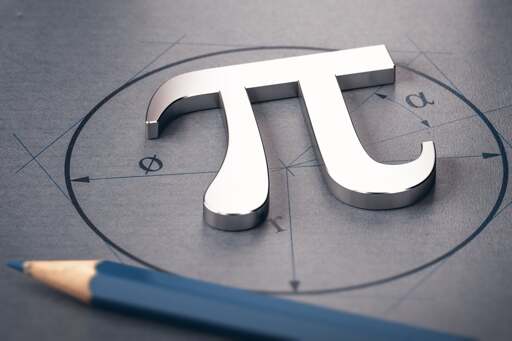
They had no idea they couldn’t legislate math and force it to obey. You are crediting them with an overabundance of brain function in relation to what evidence suggests.
They can legislate education and enforce the curriculum through hiring of staff and purchasing of educational material. That said, this isn’t what was at issue with the legislation.
In my personal experience as a kid who took Calculus and Physics, we were never really expected to use more precision than 3.14 for grading purposes.
Unless you’re getting into a professional degree of engineering or foundational mathematics, there’s no notable utility in establishing Pi past the first decimal or three.
If you get into the actual meat of the article
This is incredibly dated news and largely a commentary on how easily a state legislature will rubber stamp a bill without reading the fine print.