It might be news to some but your mail, groceries, healthcare, emergency services, construction vehicles, tradesmen and myriad other essential services require roads regardless of whether you personally drive on them.
Plus, the implication that your taxes should only pay for services that you personally use, or even for services that you might use, is just plain uncivilized.
Some people have that situation, for example, where they can choose whether to pay for fire services, and if they don’t and their house catches fire, the fire department won’t do anything except protect neighboring houses that have paid for it.
Ah, but facilities used to drive a car are private goods, in that they are rivalrous and potentially excludable. Only one car can occupy a given space at a time, and we can (and do) charge for their use. Education, on the other hand, is a public good, non-rivalrous and non-exclusive. They are not the same, and there are good reasons to fund one with tax money, and not the other.
A ton of public services use roads. Actually, literally all public services use roads. School buses use roads to bring children to school. The post office uses roads, as do firefighters and EMS. So does your electric service, waste collection, and water service
Yes, and? All of those public services rely on private goods to operate, e.g. vehicles, fuel, wages, et cetera. All of those are rolled in to the cost of providing the service, so there’s no reason that use of the basic vehicle infrastructure could not also be included. It would help eliminate deadweight loss, in fact.
Fair. I’m advocating removing all subsidies for private motor vehicles, so that we have a user-pays system, including the cost of negative externalities, like pollution, carbon emissions, and human health impacts, through taxes and registration fees (or similar). This would price the true cost of transportion into goods and services, which would lead to an economically optimal amount of driving. Undoubtedly we’d choose to drive much less, which would have lots of knock-on benefits for individuals and local communities.
Local buses are a public service run by a municipality or transit authority, generally, but are still a private good. They’re rivalrous (only one butt per seat), and excludable (can’t ride if you don’t pay). This is clearer with inter-city buses, which are operated by private corporations.
I don’t have kids why the hell should I pay for schools…wellml because I like living in an educated society, helló I’ll never bep upset I’m paying for (real actual scientifically and primary source-backed) education.
It’s economically inefficient. The true cost of transport should be naturally priced into the good or service, rather than artificially externalized. Supply-side subsidy by the government like this leads to higher-than-optimal use, which is the definition of deadweight loss. It costs us more to do things this way.
And, in this case, it’s not just taxpayers and consumers paying too much, there are catastrophic climate, social, environmental, and health effects from overuse of automobiles. If anything, government policy should work to eliminate these negative externalities by making drivers pay those costs, instead of imposing them on everybody else.
Saying “things you use go by car, neener neener” may sound profound, if you don’t examine the notion critically. It’s really just a thought-terminating cliché, though.
If it’s not nonsense, then let’s examine the logic underlying your comment: A user-pays funding model for automobile infrastructure, with all costs internalized, means that there would no longer be any motor vehicles, and thus no ambulances. So, the implication is that driving is so costly that nobody would do it if they actually had to pay for it themselves.
If your insinuation is that the existence of subsidization is the be-all-end-all of whether a form of transportation is viable or nonviable, then we need only turn our gaze to every other form of transportation available to us which is subsidized to hell and back as well to see how nonsensical your comment is. The only form of overland transportation that doesn’t require substantial state and federal government subsidies is freight rail.
So here we are again, with no way to move people around because it’s too “inefficient” for you. Have fun on your walk to your ambulance train.
Hahahaha, ambulance trains! I would predict that ambulances would cost a bit more due to higher fuel and registration costs, but I’d come out ahead because an ambulance ride is rare, compared to the income and property taxes that I pay every year. Especially since the overwhelmingly-likely way that I might break my leg is getting hit by a car. (They’d also have better response times with fewer cars on the streets.)
So we’ve agreed that private cars are a net loss to society, i.e. they cost more to operate than drivers receive in benefits. (This conclusion must follow from the idea that a user-pays system is untenable, rather than either a wash or a benefit to drivers.) We can bear that as a society, even if it’s grossly unfair, as long as the economic good times last. But the good times aren’t lasting; lots of communities are structurally bankrupt due to infrastructure obligations, primarily due to accommodating motor vehicles.
Walking and biking require no subsidies, by the way. One might argue that bike lanes are a subsidy, but they aren’t needed on streets with fewer, slower cars. Bike lanes are motor vehicle infrastructure.
Eliminating cars in cities and reducing them in towns makes sense. It doesn’t for people that are spread out. I live 15 minutes from the nearest town(by car), with a 900f change in elevation. Not very doable for most people, and essentially impossible in winter.
That’s more than prolly fine, it is fine. If you can afford to pay the true cost of driving to enable that choice of location, I’ll not mind. But what is the net benefit to society to subsidize that choice? It reminds me of the joke about losing money on each sale, but making it up on volume.


It might be news to some but your mail, groceries, healthcare, emergency services, construction vehicles, tradesmen and myriad other essential services require roads regardless of whether you personally drive on them.
Plus, the implication that your taxes should only pay for services that you personally use, or even for services that you might use, is just plain uncivilized.
Some people have that situation, for example, where they can choose whether to pay for fire services, and if they don’t and their house catches fire, the fire department won’t do anything except protect neighboring houses that have paid for it.
It’s pretty backwards for modern sensibilities.
Ah, but facilities used to drive a car are private goods, in that they are rivalrous and potentially excludable. Only one car can occupy a given space at a time, and we can (and do) charge for their use. Education, on the other hand, is a public good, non-rivalrous and non-exclusive. They are not the same, and there are good reasons to fund one with tax money, and not the other.
A ton of public services use roads. Actually, literally all public services use roads. School buses use roads to bring children to school. The post office uses roads, as do firefighters and EMS. So does your electric service, waste collection, and water service
Yes, and? All of those public services rely on private goods to operate, e.g. vehicles, fuel, wages, et cetera. All of those are rolled in to the cost of providing the service, so there’s no reason that use of the basic vehicle infrastructure could not also be included. It would help eliminate deadweight loss, in fact.
I have no idea what sort of model you’re advocating for here
Fair. I’m advocating removing all subsidies for private motor vehicles, so that we have a user-pays system, including the cost of negative externalities, like pollution, carbon emissions, and human health impacts, through taxes and registration fees (or similar). This would price the true cost of transportion into goods and services, which would lead to an economically optimal amount of driving. Undoubtedly we’d choose to drive much less, which would have lots of knock-on benefits for individuals and local communities.
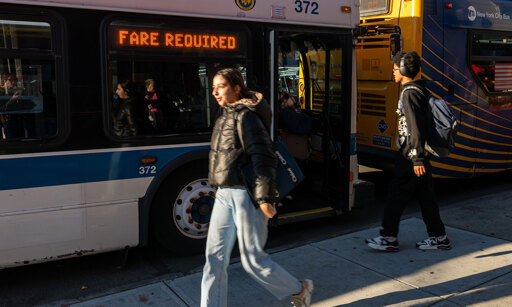
Buses exist.
Local buses are a public service run by a municipality or transit authority, generally, but are still a private good. They’re rivalrous (only one butt per seat), and excludable (can’t ride if you don’t pay). This is clearer with inter-city buses, which are operated by private corporations.
My property taxes go overwhelmingly to the school (well like 52 percent where nothing else is close to that big) and I’ll never have kids.
I like the kids educated that do exist though! Like damn we need them educated!
I don’t have kids why the hell should I pay for schools…wellml because I like living in an educated society, helló I’ll never bep upset I’m paying for (real actual scientifically and primary source-backed) education.
It’s economically inefficient. The true cost of transport should be naturally priced into the good or service, rather than artificially externalized. Supply-side subsidy by the government like this leads to higher-than-optimal use, which is the definition of deadweight loss. It costs us more to do things this way.
And, in this case, it’s not just taxpayers and consumers paying too much, there are catastrophic climate, social, environmental, and health effects from overuse of automobiles. If anything, government policy should work to eliminate these negative externalities by making drivers pay those costs, instead of imposing them on everybody else.
Saying “things you use go by car, neener neener” may sound profound, if you don’t examine the notion critically. It’s really just a thought-terminating cliché, though.
Ok then the next time you break your leg make sure you limp a few miles to the nearest ambulance-train lmao
I love these nonsensical replies. They’re very validating.
Yeah your nonsensical comment would be validated by a nonsensical reply, wouldn’t it
If it’s not nonsense, then let’s examine the logic underlying your comment: A user-pays funding model for automobile infrastructure, with all costs internalized, means that there would no longer be any motor vehicles, and thus no ambulances. So, the implication is that driving is so costly that nobody would do it if they actually had to pay for it themselves.
If your insinuation is that the existence of subsidization is the be-all-end-all of whether a form of transportation is viable or nonviable, then we need only turn our gaze to every other form of transportation available to us which is subsidized to hell and back as well to see how nonsensical your comment is. The only form of overland transportation that doesn’t require substantial state and federal government subsidies is freight rail.
So here we are again, with no way to move people around because it’s too “inefficient” for you. Have fun on your walk to your ambulance train.
Hahahaha, ambulance trains! I would predict that ambulances would cost a bit more due to higher fuel and registration costs, but I’d come out ahead because an ambulance ride is rare, compared to the income and property taxes that I pay every year. Especially since the overwhelmingly-likely way that I might break my leg is getting hit by a car. (They’d also have better response times with fewer cars on the streets.)
So we’ve agreed that private cars are a net loss to society, i.e. they cost more to operate than drivers receive in benefits. (This conclusion must follow from the idea that a user-pays system is untenable, rather than either a wash or a benefit to drivers.) We can bear that as a society, even if it’s grossly unfair, as long as the economic good times last. But the good times aren’t lasting; lots of communities are structurally bankrupt due to infrastructure obligations, primarily due to accommodating motor vehicles.
Walking and biking require no subsidies, by the way. One might argue that bike lanes are a subsidy, but they aren’t needed on streets with fewer, slower cars. Bike lanes are motor vehicle infrastructure.
Eliminating cars in cities and reducing them in towns makes sense. It doesn’t for people that are spread out. I live 15 minutes from the nearest town(by car), with a 900f change in elevation. Not very doable for most people, and essentially impossible in winter.
That’s more than prolly fine, it is fine. If you can afford to pay the true cost of driving to enable that choice of location, I’ll not mind. But what is the net benefit to society to subsidize that choice? It reminds me of the joke about losing money on each sale, but making it up on volume.
Road != car road
Don’t tell the /fuckcars people that. They’ll get absolutely livid and start calling you names.
I don’t think that’s true.
You don’t think this would merit a “carbrain”? I’ve seen it thrown at much less.