The uneducated don’t ask questions or suspect they’re being taken advantage of. This is by design.
I’m dumb and poorly educated, but i still don’t like dumpy mcshitpants.
Skill issue, not dumb enough
The thing about being stupid, is that you don’t know you’re stupid.
Real stupid people are proud and arrogant of their ignorance.
Ps: reading this draft again, it seems like a no real Scotsman fallacy. But I’ll post this anyways just because
Fun fact on why Missisipi, of all the places, improved: they introduced a law that a child cannot be promoted to next year if they do not pass reading proficiency test.
Who knew the shame of repeating a year can be motivator enough for kids and parents.
it’s more than that: they’ve been hiring literacy coaches to sit in on and improve literacy classes across the state and rating schools while double-counting the performance of the bottom 25%. plus lots of testing
https://www.nytimes.com/2026/04/10/podcasts/the-daily/mississippi-schools-test-scores.html
Decades of studies have shown that retention, repeating grades, is not beneficial for any stakeholder.
Well schools have been forcing teachers to pass failing students for at least a decade now, and look at how that’s going.
I never said there’s not a problem, just saying that’s not the answer. Like, factually.
Except the one right here in front of your eyes
Which one is that? I don’t see it.
Clearly
Well, hey. Thanks for the trump-level clarity.
-upset with no evidence
-didn’t provide evidence to their own claim that disputed an interpretation of source material nor offer an alternate explanation
An internet tale as old as shit posting
Sorry. Offered proof in a different part of the same thread. Inability to read through threads. A tale as old as time.
Does stakeholder here mean shareholder? As in, it’s not good for the capitalists to ensure that students are forced to actually learn things?
Flippant anti-capitalism aside, I’m skeptical of your claim, but I would love to see a source if you have one to share.
“Stakeholder” is simply anyone who will be effected by “x”. whether “x” is a policy change, or something as simple as choosing a new brand of peanut butter for your family.
“Who are the people who will be effected by this?”
In Project Management you’re taught that one of the first things you do when implementing a change or starting a new project, etc… Is to Identify the stakeholders.
I’m sure there’s a more concise definition, but I just woke up.
There have been studies done since before I became a teacher. And now that I’m retired, I’m talking about decades of research:
Jimerson looked at 20 studies published between 1990 and 1999, and concluded that they “fail to demonstrate that grade retention provides greater benefits to students with academic or adjustment difficulties than does promotion to the next grade.” In many studies, students who were retained had worse academic achievement and social-emotional outcomes than students who were not.
Another research review from Jimerson and his colleagues, this one published in 2002, found that grade retention was also linked strongly to dropping out of high school. -source
The source also brings up the racist underpinnings that too often support holding kids back. I said before, but just to reiterate, there is a problem that needs to be addressed, but retention is demonstrably not the answer.
Thanks for responding. Yeah that makes sense.
None of these studies account for mental disabilities that impact learning. There are so many people who were kids in the timeframes of those studies who are getting ADHD, ASD, dyslexia, dyscalculia, dysgraphia, dyspraxia, and other diagnoses more recently that would completely change the outcomes of the studies.
There are numerous students who need accommodations that schools aren’t trained for, don’t have the money for, or have staff that don’t believe any accommodations should exist. The very active public attack on schools that’s been happening (funding cuts including funding specifically for disabled students, terrorizing teachers and students, etc) is exacerbating the issue.
The solution is to get the government to actually support students instead of funnelling money to the rich and trying to keep the masses dumb and compliant.
My state repealed a law a few years ago that required holding kids back who failed the 3rd grade test.
To point the problem more clearly.
If student Numbskull repeats the grade. That means the their low scores affect you in Year 1 and Year 2. That’s funding directly affecting you, your compensation, your ability to remain employed for you, the teacher, and all of the admin staff.
It’s much better (for you) to push them along and make them someone else’s problem.
It’s like the Peter Principal in action.
They don’t take the test until grade 4, so repeating grade 3 does not impact funding being student population.
It also looks like the bar started very, very low.
They’re soon going to learn Goodhart’s Law if they don’t already.
Thank you for this. I’ve been saying basically the same thing for years. Didn’t know there was a term for it.

You’d probably knows this was old news if you read more.
This, of course, is why people have stopped commenting on the internet.
Downvoat beecaws this kommint is baiassed aginst peepole hu kant reed gud.
Bi-assed
It’s a Shepherd’s Tone headline. Taken at face value, I have to assume 110% of the county is illiterate and scores are expected to get twice as bad by the end of the year.
Here’s a jpg of a graph with no citations and a poorly defined X-axis. Please go be Doomers in the comments now. Don’t forget to point at a generational cohort and blame them for everything
Everything you said is wrong. You’re not even replying to a doomer. The graph, the source link, the headline, the joke, it all went over your head. Incredible.
COVID stole a year or two of schooling for students in poorer families.
it stole 4 years for college and hs students. Ive read some reviews about certain schools in my area, before the lockdowns/protocols were lifted they were all unsatisfactory lack of experience, dint learn anything and job search, while the school was having trouble financially and raising TUITION all across the board. the ones that escaped from my local state uni, went to a UC school instead and had far better success, because that school likely had better resources for students undergrad experience and post-undergrad job search. some people started college around 2019-2020, they still lost the 4 years because the schools/instructors got lazy and put all thier lectures online instead of going to lecture in class even after they lifted lockdowns.
Would like to see the data disaggregated by grade. If this is the culprit, then we’ll see a rebound as kids away from covid appear.
But I believe (based on data from, say, other countries) that we don’t see this. Reading scores have been tanking for some other reason.
I suspect a big reason for this can be blamed on the US no longer teaching kids to read with the phonics method (learning how yo sound out words by individual letters), and instead have been teaching a method to figure out what a word means with context clues, but many kids cannot sound out an unfamiliar word since they weren’t taught the phonics method.
Only now are states beginning to reverse that in an attempt to reverse reduced literacy rates, which will take some time to have a noticeable effect.
In a 2019 interview, Goodman responded to criticisms of three cueing, saying that “word recognition is a preoccupation” and emphasizing that he places greater value on making sense of language as a whole than understanding specific words. In response to the example of children failing to distinguish between “pony” and “horse”, Goodman argued that it was irrelevant whether children understood the specific word, as “pony” and “horse” are similar concepts, and a reader failing to distinguish between them would still understand the meaning of the story as a whole.
Absolute nightmare
He’s literally describing what people with functional illiteracy do to work around being unable to read at a working level. He’s describing it as an acceptable goal. Batshit crazy.
That’s some ponyshit reasoning.
Similar trends are observed in other countries, so the explanation isn’t US-specific.
Instead, it’s simpler: kids read less than they used to, and when they do, it’s social media-tier.
Social media likely is a contributing factor. The pandemic is another factor for lower literacy elsewhere. I suspect that the poor reading method taught in the US only compounded those issues to an even harsher degree.
Pandemic definitely hit this too. The schools in my state have consistently scored about one grade level down for every cohort that was in school during 2020. That experiment in fully remote schooling (elementary through highschool) definitely failed - it’s as if they didn’t even go to school that year.
The pandemic made things worse, but something bigger is going on.
The new data provides the first national comparison of school districts through 2025, and… underscores that many districts have experienced a long-term slump in student achievement, not just a blip during the pandemic.
From 2017 to 2019, students lost as much ground in reading as they did during the pandemic, and reading scores continued to fall at a similar rate through 2024.
Students’ test scores had been increasing since 1990 — then abruptly stopped in the mid-2010s. That coincided with two events: an easing of federal school accountability under No Child Left Behind, which was replaced in 2015, and the rise of smartphones, social media and personalized school laptops.
It’s gonna be the pandemic hands down. The school system was never good at catching up students who were a year behind and that happened at scaleband now the system has no way to adapt
The pandemic made it worse, but the trend was already negative before the pandemic.
100%, the pandemic likely compounded the issue dramatically.
Were all states doing that together? With fifty “laboratories of democracy” it should be possible to tell if 3Q hurts or not.
Finding information on if it was universally adopted is proving difficult. Best I could find is when states started enacting legislation against 3-Cueing. Mississippi was the first to require phonics be taught to children back in 2013, and they are the only state in the OP’s graph to show a strong improvement since 2015 (even though it’s still not reading at grade-level). Unfortunately Covid threw a wrench in our ability to suss out if eliminating 3-cueing is helping, as even if it did, the lack of schooling during that period seems to have really set back all of the kids who went through it, as they can’t really benefit from teaching phonics if they’re receiving it poorly through tele-schooling.
From the article:
The new report found that science of reading reforms were necessary, but not sufficient, to improve scores. Only states that had embraced science of reading reforms showed improvement from 2022 to 2025 — yet not all of those that did saw gains.
I don’t think this explains 2015 versus 2025. Phonics started to get discouraged around 2000, and the pendulum has swung back hard the other way in the last 5 years, with the last holdout districts/states re-implementing phonics-based instruction.
If anything, I’d expect 2025 students to have had more experience with phonics in school than 2015 students.
A big part of the issue is a lot of states abandoning “phonic” based teaching for “whole language”. In phonics the focus is on teaching how letters come together to form the sound of a word, while whole language is based on just memorizing the pronunciation of words. kids being taught how to sound out words will take longer to get to a point of being able to read out short simple text, but whole language can get them reading simple stuff with all the words they’ve already been taught very quickly.
The problem is that when you move past simple stuff only using words they’ve memorized, a kid taught to sound out words will be able to figure out words they haven’t seen before, meaning that they can start to learn new words passively just by reading more complex books. The whole language taught kids need to learn every new word by instruction or by just guessing based on context, making it much harder and slower. It gets frustrating quickly and kids taught this way rarely develop a real interest in reading due to that difficulty.
They’re not even taught how to use context or subtext to understand a word they don’t know. It would actually be more helpful if they did instead of just letting them go ahead and invent an entire new meaning for words they don’t know.
That is actually incorrect. You’re describing the entire point of Whole Language learning.
They are to learn a number of words, and then use their collection of words to deduce other words.
The problem is they don’t necessarily deduce correctly. Who is to say you deduced them correctly?
Also people are lazy. They would rather just leave the blanks than fill it in.
Cool that explains why I’m arguing over the literal definition of words and the context they are used in with 20 somethings constantly.
Wtf this sounds crazy, what asshole implemented this change?
Marie Clay and Lucy Calkins
And then when Bush Jr implemented “No Child Left Behind,” schools had to use certain research-backed curricula if they wanted to keep their funding. So they trusted that the “research” about whole-language reading curricula was true. It took decades to see that it wasn’t the teachers’ implementation that was flawed, it was bad research. The approved curriculum reinforced bad reading practices.
In other words, grifters. As is tradition in America, apparently.
A big part of the issue is a lot of states abandoning “phonic” based teaching for “whole language”.
I don’t think this is accurate for explaining 2015 versus 2025. Phonics was discouraged from maybe 2000 to 2020, and education has moved back towards phonics in the last few years. Most major school systems in the US put more emphasis on phonics now than they did 10 years ago.
An impact on early education stunting people’s reading capabilities wouldn’t show up for about 10~20 years… so… between 2015 and now is where the impact would be most obvious.
There are of course other factors, such as the cost cutting and underpaying of teachers leading to shortages and larger class sizes, but the introduction of whole language absolutely lines up with the dramatic spike seen recently in functionally illiterate young adults/teens, if you account for the fact that the effects wouldn’t be fully manifested until people taught it in kindergarten reached a point where they’re expected to be functionally literate teens and young adults.
The data comes from tests given to students in grades 3-8, so changes in pedagogy should trickle through completely within 8 years or so.
And my point is that anti-phonics advocates started actually phasing out phonics in the 90’s and 2000’s, so that the teachers between 2007 and 2015 (those critical 8 years of instruction for students taking the test in 2015) were probably the most anti-phonics cohort of the historical data.
From that history, I would assume that the 8-13 year olds in 2025 had more formal phonics instruction than the 2015 cohort.
Yes, but the changes will take a few years to truly show. Because young kids won’t really start to struggle until they start getting into the more advanced stuff years later. A change back to phonics a few years ago likely wouldn’t have made a noticeable difference yet, because the kids who learned phonics won’t be old enough to be reading the more advanced stuff yet.
Sure. The underlying study looks at 3rd through 8th grade, so we’re talking about critical literacy education happening between 0-8 years before the testing date.
But phonics fell out of favor by the early 2000’s as many teachers, school districts, and state boards created curricula around whole word recognition and three cueing. Pro-phonics backlash happened around then, too, so plenty of kids were getting side instruction from parents and after school tutoring, if their parents were more involved. But test scores peaking in 2015 doesn’t quite fit the timeline of the anti-phonics movement peaking in the early to late 2000’s. So the 2015 test takers got the most anti-phonics education, perhaps more anti-phonics than 2025 test takers.
Plus, if we’re gonna talk about parental involvement and after school tutoring, one interesting thing about the 2015-2025 drop is that it’s happening across all income levels and most pronounced at middle income levels, where I’d imagine there is a lot of parental and after school support.
The data is interesting, and I suspect there are multiple causes adding up.
deleted by creator
The GOP welcomes their future voters. The dumber they are, the better for Republican votes.
Some heavily blue states plummeting too here.
Future red states you mean.
Damnit NYT, states have an abbreviation standard!
Journalists have always used the old postal abbreviations. It’s part of the Associated Press style.
The NYT has its own style guide that doesn’t always match the AP.
The problem is for a lot of those I’m just guessing what they’re supposed to be.
Which ones have you guessing? It feels a little insane to read compared to the standard 2 letter abbreviation, but they’re all pretty clear to me.
What’s Ga. Va. and Gt.
Georgia, Virginia, and Vt. is Vermont.
Those are all literally the current standard postal abbreviations, just not in all caps.
Yes but the average NYT reader doesn’t know them.
Something to do with DC being the third lowest on this graph
Yes but people are now too stupid to know them.
If I could read, I would have taken this personally.
Some states are missing?
If they could read, they’d probably be really mad about that.
Per the article:
The data includes third- through eighth-grade test scores for districts in 40 states and the District of Columbia, as of the end of last school year. It accounts for about 68 percent of U.S. school districts nationwide. (Ten states were excluded, among them New York and Illinois, because of high opt-out rates or noncomparable data.)
Oddly, only 38 states + DC in the graphic shared here
Yeah, there are 39 entries here by my count, for 50 States + DC. 12 states are missing.
Perhaps they didn’t have access to data for these states? Perhaps the graph would be a bit different with them included? I do not know.
Sometimes I wonder if we should have a “learn to read” community where we post an article or short stories or excerpts of longer works with some comprehension questions and discuss in the comments. Where discussing what you think about a headline or article is forbidden and only discussion about what it actually says is allowed.
Some sort of online community for people to practice reading, especially critically so they practice skills like recognizing subtext, irony, themes, etc, could probably be cool
Unfortunately, the people on a text based platform like Lemmy probably have better than average reading skills. The people who need more help probably stick to video.
Also there’s a surprising amount of anti-intellectualism, sometimes, where people say things like “it’s just a story it doesn’t have any deeper meaning!”. Fundamental misunderstanding of how meaning works. (You don’t find the correct answer. You make up an answer and justify it with the text.)
Just speaking for myself, but even though I don’t “need” help I still feel my literacy becoming more siloed and my patience for reading reducing over time, so a community for collaborative/social reading would be motivating for me. Plus I have friends and family who could use the same encouragement or examples of what to read, so I’d participate for the inspo.
Have you considered a book club? Locally or on Lemmy. That might be nice, though I’m not sure how to level it up from “we’re reading this” to include “and we did some critical analysis”. Also online is more vulnerable to slop, even though I don’t understand why someone would use AI to think for them in an exercise that’s entirely about thinking.
A friend of mine had a book club and was reading a book a month, but then the ring leader had a kid and it’s on hiatus.
Good suggestion, thanks. Honestly I haven’t looked very hard, I would probably enjoy a book club. In Lemmy form I like the idea of a rotating crew of participants with a few regulars, and that it’s not strictly books though I’m sure some book clubs probably feature short stories or articles too.
I just don’t have it in me to regularly participate in a book club. Short form practice when I can fit it in sounds so nice. I love reading and I read a book or two (sometimes 5) a month, but they’re always low effort fiction so I’m not really practicing any skills. My reading is far too interrupted (by life, toddler, chores, pregnancy) for me to read anything that requires critical thought. It’s hard enough to follow a plot when I’m getting only 2 pages (or less) at a time, sprinkled through out the day. I hope in a few years when my kid’s can finally read to themselves I can manage to get back to actually thoughtful reading.
Only if there are no paywalls or surveillance crap on the articles posted there
Paywalls are easy; avoiding surveillance would be extremely difficult.
Something I’ve also noticed lately. Basic fucking math. I more often than not pay in cash, and recently I’ve had more than one person at more than one place give me incorrect change. And just not like a few cents, but dollars amount wrong. And when I try correcting them they’re so adamant they’re right even when I’m like… dude, you owe me 50 cents, not 3 dollars.
Doesn’t the register show the cashier how much change he has to give out? Or are the math skills so bad that even just counting is already a challenge?
No idea where dude is shopping but I haven’t seen a register that didn’t show the change in the last 20 years. When I worked retail cashiers were told to never do math just put the numbers in the machine and give the customer what ever the machine says.
I have, on multiple occasions paid an an amount that would have someone give me $5 back in change or exact cents, then had them be utterly confused and have to pull out a calculator.
But like, if the total is 17.75, and I hand them $22.75. I’m expecting the person to be able to figure out I’m making it simpler for them.
Well… simpler for you. Unless the store is low on ones, I never understood why this feels like a favor. It’s nicer for you to walk away with just a five rather than two ones back when you already have an extra 2 ones in your wallet you don’t want. A cashier doesn’t care what denominations they have.
Either way, embarrassing when people can’t do basic addition (though I remember the first time this happened to me as a teenager, and it wasn’t the addition that tripped me up, it was the concept. The customer was so impatient because it was so “obvious” they wanted fewer bills back, but I was just afraid I was missing something they were trying to buy. I’m guessing as cash becomes rarer, more people just are unfamiliar with this tactic.)
jesus fucking christ dude haha
That’s not from math. That’s from lack of practice. Nobody has used cash in 10 years.
Yeah, no coins feature numbers prominently (one says “dime” instead, a word nobody ever uses otherwise), some are near-worthless, the dollar is not nearly as widespread as it should be, the diameter is often not increaing by value (even within the same metal series) and the notes are way too similar, plus their value is on the low side… No wonder Americans switched to checks and insecure cards so soon
What?
No, it’s because we have something called “Civil Asset Forfeiture” which basically means that American cops can just stop you for no reason, file a lawsuit against your cash and just take it out of your wallet. If you want it back, you have to declare yourself to be a criminal defendant, and then be found not guilty of the criminal charges against you. If you don’t, they get to keep your money to put in their pension fund.
Dime is a pretty common word among basketball commentators and fans. It means assist!
A point guard who’s dropping dimes all over the place is playing really well and helping facilitate the team’s scoring.
Yes but I feel like nobody would miss that word if coinage now said “10 ¢” instead (or 𝐓𝐄𝐍 𝐂𝐄𝐍𝐓𝐒 because numerals are apparently hard). Saying “it’s a dime” is shorter, sure, but that can’t be said about almost anything nowadays.
I left the US five years ago and now I live in a country where the coins still have that problem (some are different sizes even when they have the same value!), but at least the bills are sized by denomination.
US bills must be a nightmare for people who have impaired vision.
If they are giving you an extra $2.50
Why are you complaining?
It’s gonna fuck them at the end of their shift when their register cash is wrong.
Aye I worked retail.
I learned real quick how to do math when I had to make up the difference.
It’s literally the definition of their job.
Everyone can have a bad day or a brain fart. I’d rather take a few seconds to correct someone than screw them at the end of their shift. I’ve only ever walked off if they literally wouldn’t talk to me or shooed me away.
Also in Europe. It’s obviously related to unrestricted internet use and smart phone proliferation.
For the first time in a long time, we’re having generations that are dumber than their parents.
Removed by mod
They think they are smarter though. Beacause Tiktok told them so.
The inconvenient truth for us old shits is that the parents are at fault mostly. Mostly we were powerless to stop it as a megatrend of course, but also many of us used our own money and our own free will (if there’s such a thing) to buy our kids those devices and then let them use them freely.
Removed by mod
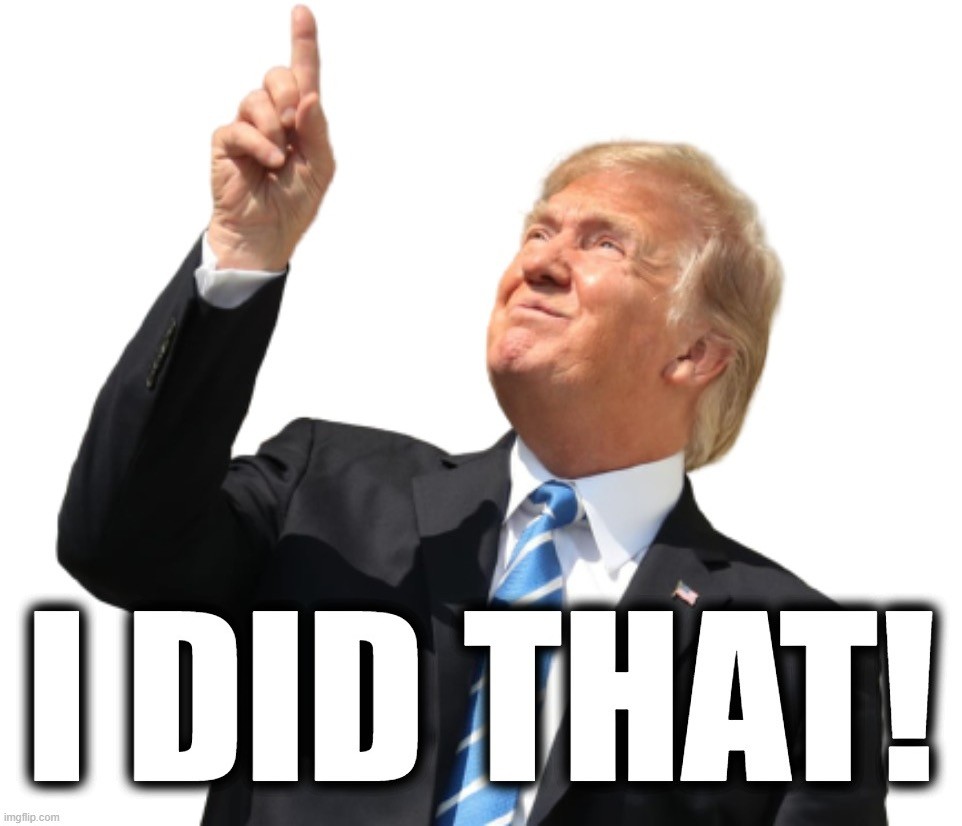
2015-2025. I mean the timeline checks out
Soon in the red states, it will be a badge of honor to be illiterate. Tr*mp loves the poorly educated bigly.
I wish I could remember the quote instead of my shitty paraphrase “These people act like education is a trap they avoided, instead of something they failed”
In a country where higher education is a debt trap, that kinda makes sense.
Lots of people already use “book lernin” as an insult.